

How to let your dialogue do more of the storytelling.

I’m so glad you’re here. Welcome!
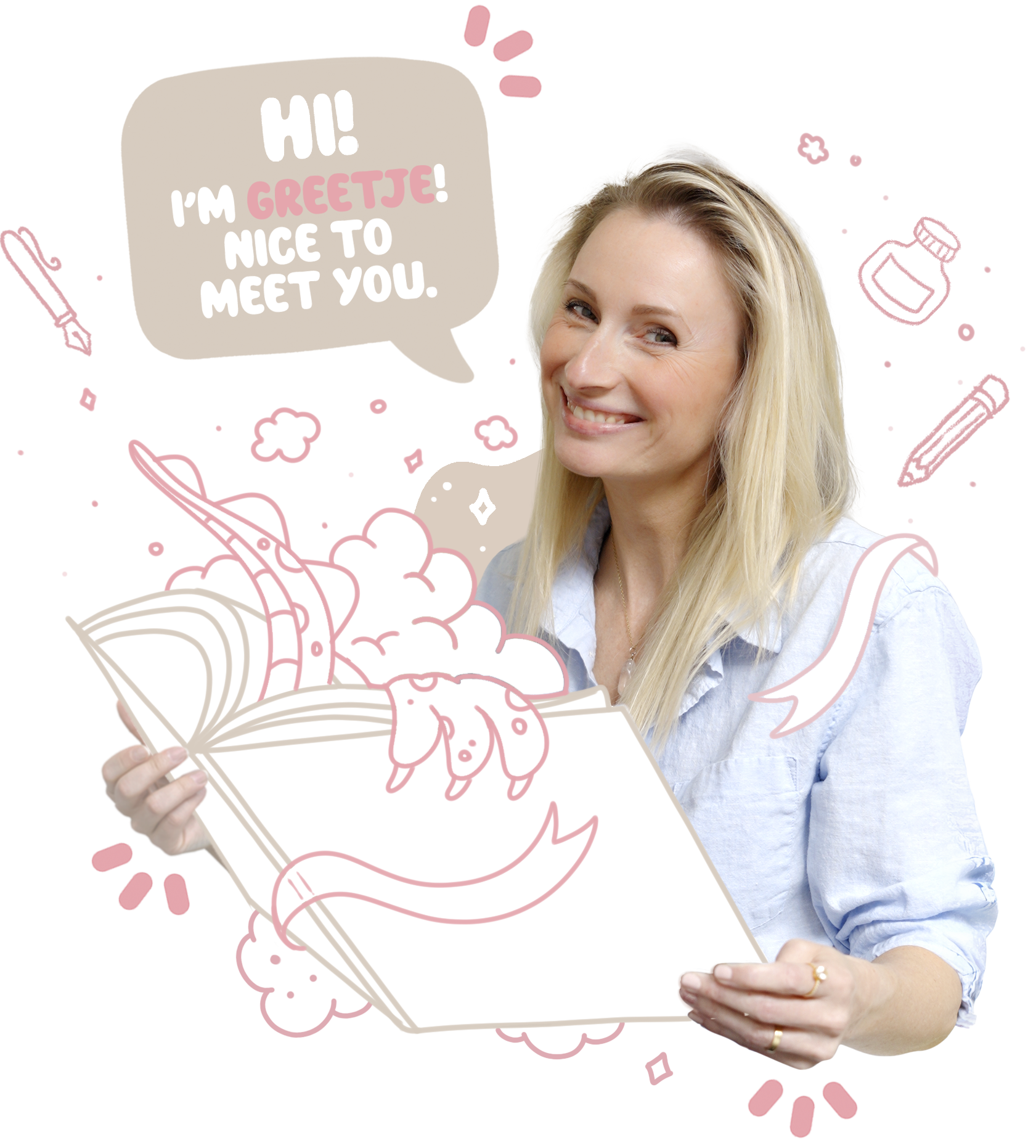
I’m Greetje, an acquiring editor with over 15 years of experience in children’s publishing. And if there’s one thing I’ve learned from reading countless manuscripts, it’s that sometimes the smallest changes make the biggest difference. Especially when it comes to dialogue!
When we write conversations between characters, we often focus on what they need to say.
But great dialogue can do so much more than exchange information. It can reveal personality, introduce a problem, create humour or send the story in a completely new direction.
In this exercise, we’ll explore two simple techniques to make your dialogue work harder for your story. All you need is a little imagination and somewhere to write.
Ready? Let’s play!
Let the reply change something.
Writing Exercise - 01
THE FIRST DRAFT
“Shall we build a snowman?”
Mouse asked eagerly.
“Yes, let’s do that!”
Bear replied.
Imagine two friends on a snowy winter morning.
Mouse wants to build a snowman.
Here’s how their conversation might look in a first draft.
As you can tell, there’s nothing fundamentally wrong with this conversation.
But it doesn’t give us much to work with either.
Mouse asks a question, Bear agrees, and that’s that.
What if Bear’s answer introduced something new?
Let’s look at some examples
Here are three ways I would approach this exercise.
1. The unexpected idea
Bear agrees, but suggests something Mouse hadn’t considered.
“Shall we build a snowman?” Mouse asked eagerly.
Bear took his biggest scarf.
“Only if we can make a third friend out of him!” he laughed.
Why this works:
This unexpected idea opens up new possibilities to advance your story.
Will they do activities together?
Try to put the snowman on a sledge?
Hold snowball fights together?
Bring him to the table to eat, where he will start to slowly melt?
2. The complication
Bear’s reply introduces a small problem that the characters will need to solve.
“Shall we build a snowman?” Mouse asked eagerly.
“Even though we wanted, we can’t anymore,” said Bear.
“Why not?”
“Remember his nose? I ate it.”
Why this works:
The small problem pushes the story forward to find a solution and lays out an entire road to that solution.
Will they find something to replace that nose in the house?
Do they have to go out and find a new carrot?
What if they tried out the funniest and unusual things as a nose?
3. The surprise
Bear says something completely unexpected that makes Mouse (and the reader!) curious.
There’s only one rule: Bear can’t simply agree or disagree. His reply needs to introduce something new.
“Shall we build a snowman?” Mouse asked eagerly.
Bear scratched his head.
“Only if we make him look nothing like me.”
“What do you mean?” Mouse replied.
“Last time, het got all the warm hugs instead of me.”
Why this works:
The unexpected reply opens up an entirely new emotional arc. Suddenly the snowman is an entity that got a lot of interaction instead of the main character, which evokes a strong emotion.
Now it’s your turn
Keep Mouse’s opening line exactly as it is:
“Shall we build a snowman?” Mouse asked eagerly.
Now write three different replies for Bear with the previous tips and tricks as guidelines.
Why does this work?
When I’m reading a picture book manuscript, I pay close attention to what each conversation contributes to the story. Picture books have very little room for dialogue that doesn’t serve a purpose. Look at our three examples.
In the first, Bear introduces a new idea. We also discover something about his personality. Perhaps he’s thoughtful, or perhaps he simply believes everyone needs a friend.
In the second, Bear creates a problem. It’s a tiny problem, but it gives the characters something to do. How will they build a snowman without a carrot?
And in the third, Bear introduces an emotion. What emotion could this be? Jealousy? Sadness? Maybe even anger?
Suddenly, we want to explore more of Bear’s arc!
Each reply does something different, but they all have one thing in common:
They change what happens next.
And that’s what makes dialogue interesting. Remember, moving a story forward doesn’t always mean introducing a big event. Sometimes it’s enough to change a character’s mind, introduce a new possibility or give someone a decision to make.
My tip as an Editor?
When revising your manuscript, look for conversations where characters simply exchange information.
Ask yourself:
What changes because of this reply?
If the answer is nothing, try giving one of your characters something more interesting to say or do.
The Editor’s Desk
And remember the most important part:
keep creating.
Ready for the
next step?
If these questions have already given you new insights, imagine what we could discover together.
Every story is different, and so is the journey of bringing it to life. Whether you’re looking for thoughtful feedback or more personal guidance, choose the support that feels right for you, your story, and where you are right now.
Whatever your path,
there’s something here for you.
Professional Editorial Feedback
Receive a thoughtful written assessment of your manuscript or illustration portfolio, including practical suggestions, editorial insights, and clear next steps. Perfect if you prefer to work independently and revisit your feedback at your own pace. No pressure, your rhythm.
What’s included?
This session is designed for those who prefer clear, focused feedback without a live call.
You can send me your manuscript, illustration portfolio, or project, and I will take the time to review it carefully and thoughtfully. I approach your work with both a creative and editorial eye, looking at what is already working, where it can be strengthened, and how it can move forward.
All feedback is delivered in a written PDF, so you can return to it whenever you need.
My feedback includes:
the placement of your story within the current picture book landscape
your expected target audience
a comprehensive review of your work, focusing on how well your story connects to its intended reader, its impact, and originality
clear, actionable feedback on your writing or illustration style, structure, and pacing, with suggestions for refinement
honest insight into the commercial potential of your project
practical exercises to help you work on structural weaknesses and strengthen your storytelling skills
What happens next?
After your purchase, you’ll automatically receive an email with a link to a short submission form.
There, you can upload your manuscript, illustration portfolio, or project, and answer a few questions about your work and what you’re hoping to get from the feedback.
Once I’ve received everything, I’ll begin reviewing your project. You’ll receive your personalised written editorial assessment within 7 business days.
This option is ideal if you’re looking for professional, honest feedback and clear direction, while working independently and at your own pace. If you would prefer a more personal approach, with the opportunity to discuss your project together, you can choose the One-to-One Editorial Session instead.
What’s included?
Each feedback session starts with a 15-30 minute video call, where I get to know YOU.
Why are you writing or drawing? What drives you? Which message do you want to deliver? And why?
I want to know everything about your intention and true wish for this project to become. No worries, I will send you some questions upfront to think about, so you don’t feel overwhelmed at the moment. But watch and see how a deep dive into your intention will redirect the course of your work and start your creative flow at the same moment.
This sets the bar for the feedback that I will give you. This way, my feedback is not ‘just’ my opinion, but a clear roadmap of the direction you are looking for. (sometimes without even knowing before)
After the call, I will take the time to look at your project in a focused and thoughtful way. This is a moment for me to slow down and really understand what your story is doing, where it already works, and where it can be strengthened. In a written assessment, I will guide you through your project with both a creative and editorial eye, helping you see it more clearly and make more intentional choices as you move forward.
1. So, during the call, I will:
search for your true intentions behind what you do
understand the context this message is brought from
get you to clarify the core message you want to tell
get to know your expectations around your work
2. Afterwards, you’ll receive a written assessment of your manuscript or illustrations, including:
the placement of your story within the current picture book landscape
your expected target audience
a comprehensive review of your work, focusing on how well your story connects to its intended reader, its impact, and originality
clear, actionable feedback on your writing or illustration style, structure and pacing, with suggestions for refinement
honest insight into the commercial potential of your project
industry-specific guidance to help your work move closer to publication
a deeper understanding of how the publishing world works, from both a creative and editorial perspective
3. Finally, you can send me your revised manuscript or illustrations for one last review, so I can give you feedback on the changes you’ve made and help you make sure your project is ready for its next step.
What happens next?
After your purchase, you’ll automatically receive an email with everything you need to get started.
First, you’ll be able to schedule your One-to-One Editorial Session at a date and time that suits you best.
You’ll also receive a link to a short questionnaire where you can upload your manuscript, illustration portfolio, or project and answer a few questions about your work.
These questions help me understand not only what you’ve created, but also why you’ve created it, allowing us to make the most of our time together.
Once everything has been submitted, I’ll prepare for our session and look forward to meeting you.
Together, this process is designed to give you clarity in your story, direction for your next steps, and the confidence to move your work forward in a way that feels both true to you and aligned with the publishing world.
One-to-One Editorial Session
Start with a personal video call where we explore the intention behind your project before diving into your work. Together, we’ll uncover what your story truly wants to say, followed by a detailed written editorial assessment to guide your next steps.

Every great children’s book begins with a creator who was willing to keep asking questions. And if you made it till the end of this workbook, I’m sure yours will be next.